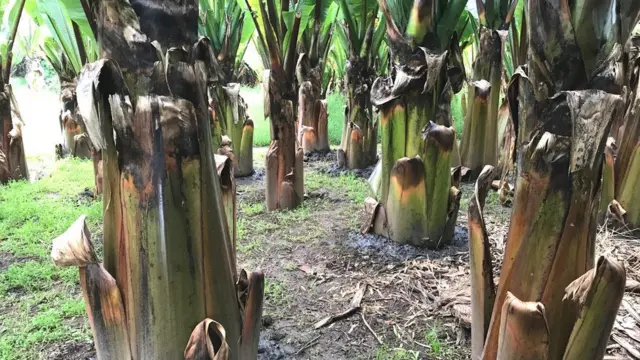
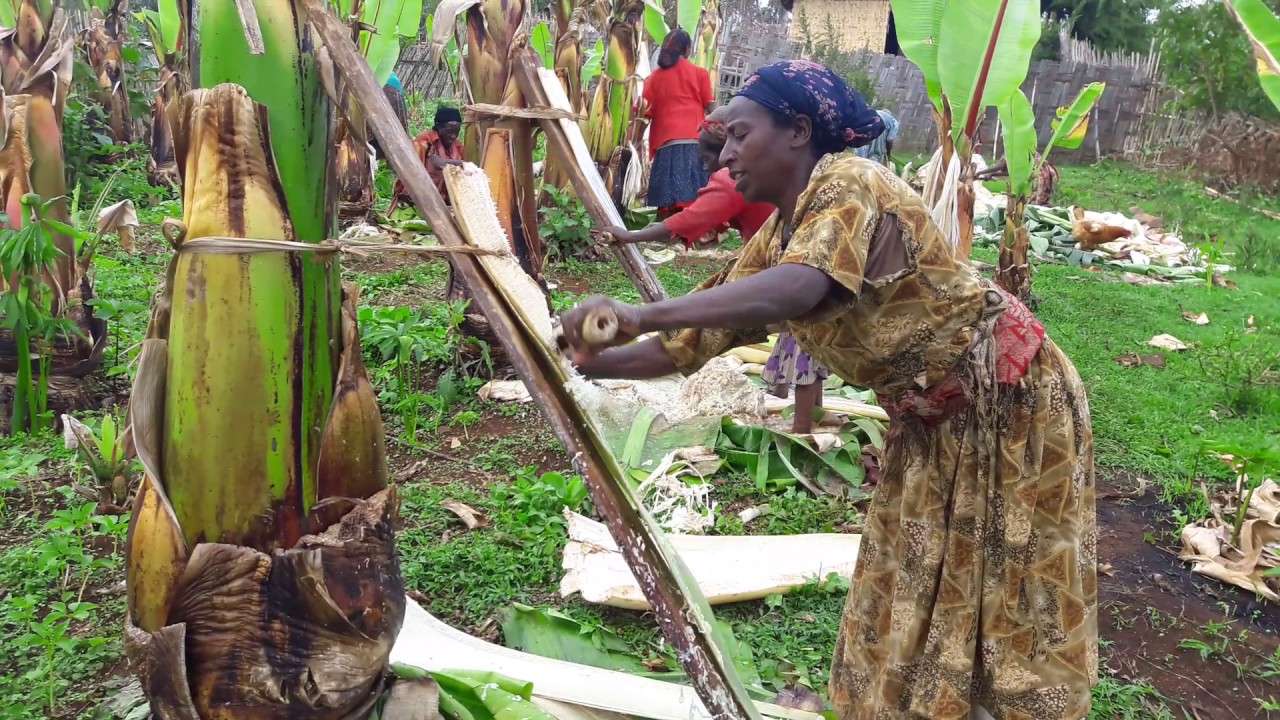
Enset (Ensete ventricosum), also known as the “false banana,” is a perennial crop indigenous to Ethiopia. It plays a crucial role in the food security of over 20 million people, particularly in the southern and southwestern highlands. Unlike the true banana, Enset is not grown for its fruit; instead, its pseudostem and underground corm are processed into a highly nutritious food source.
Enset (Ensete ventricosum) belongs to the banana family but is not cultivated for its fruit. The plant’s pseudostem and corm are rich in carbohydrates and essential nutrients.
Enset is widely cultivated in Ethiopia, particularly in the Southern and Southwestern regions. The plant is a staple crop for millions, providing food security in diverse agroecological zones.
There are over 200 identified Enset landraces in Ethiopia, each adapted to different climates and uses. Conservation efforts focus on maintaining genetic diversity.
For more information about Enset, explore the following sources:
Brandt, S.A., Spring, A., Hiebsch, C., et al. (1997). Enset: The Tree Against Hunger. American Association for the Advancement of Science (AAAS).
Borrell, J.S., Goodwin, M., Blomme, G., et al. (2019). "Enset in Ethiopia: Genetic Diversity and Conservation Status." Annals of Botany, 123(4), 747-764.
FAO (2020). "Enset-Based Farming Systems in Ethiopia." Food and Agriculture Organization Report.
 Read More
Back to Home
Read More
Back to Home

 Read More
Back to Home
Read More
Back to Home
 Read More
Back to Home
Read More
Back to Home
 Read More
Back to Home
Read More
Back to Home